Disclosure: Money Zoomer may earn a commission if you sign up for a product through links on this page, at no extra cost to you. Our opinions are our own, and a commission never changes what we write. See our Editorial Guidelines for how we review products.
Financial Disclaimer: This article is for general educational purposes only. It is not personalized financial, tax, legal, or investment advice, and Money Zoomer is not a licensed financial advisor. Consider speaking with a qualified professional before making financial decisions.
Most budgets fail for the same reason: they are built for an imaginary version of your life. They ignore irregular bills, assume you will never eat out, and fall apart the first time something unexpected happens. A budget that sticks is one that fits the way you actually live.
In this guide we compare the most popular budgeting methods, walk through a worked example, and give you a seven-step process to build a budget you will still be using next year.
What a Budget Really Is
A budget is simply a plan for your money before you spend it. It answers three questions every month: how much is coming in, where is it going, and is that what you want? It is not a punishment or a spreadsheet exercise. Done well, it is the tool that lets you spend on what matters to you without guilt, because you have already covered everything else.
Four Popular Budgeting Methods
1. The 50/30/20 Rule
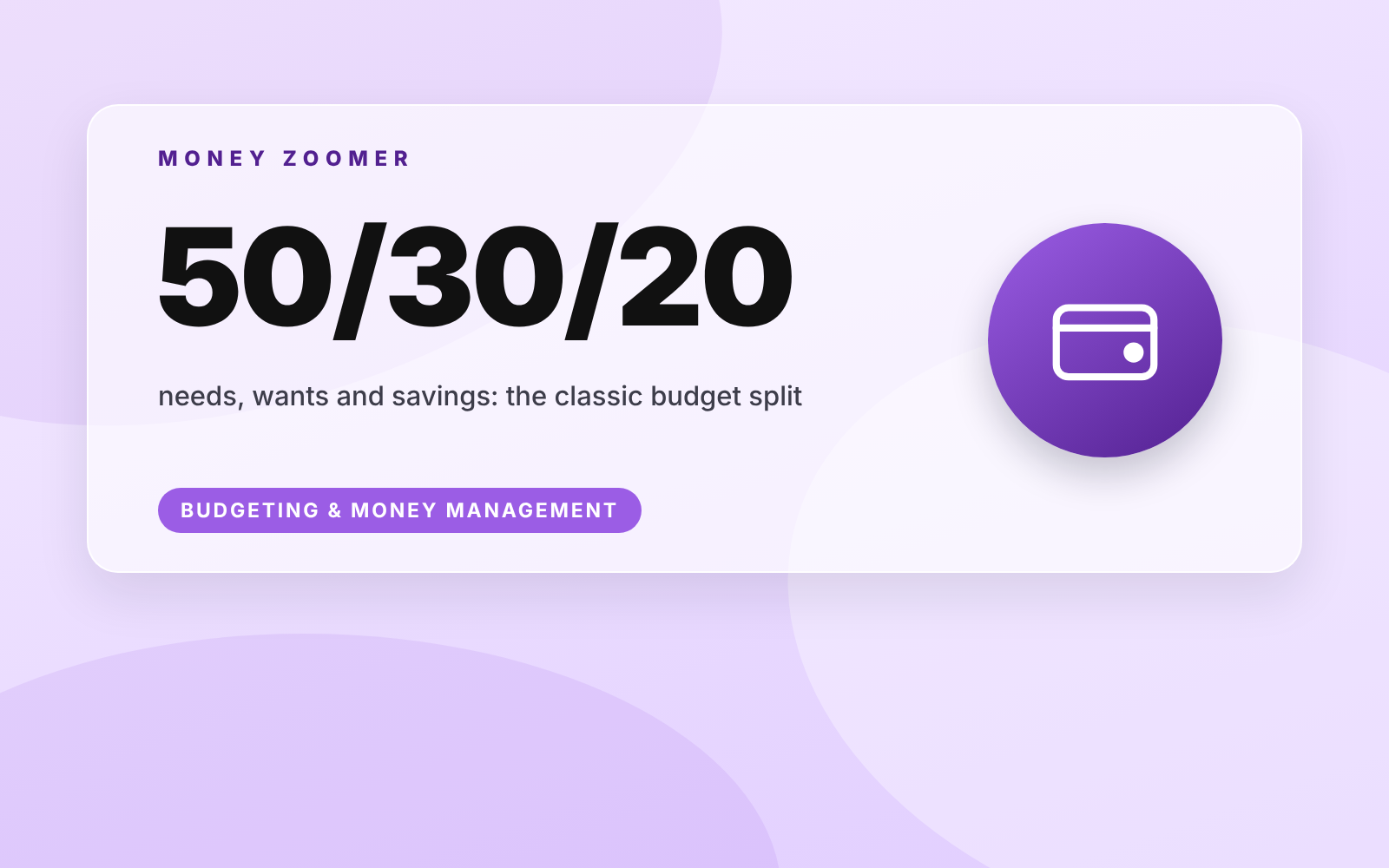
Popularized by Senator Elizabeth Warren and Amelia Warren Tyagi in their book All Your Worth, this method splits your after-tax income into three buckets: 50% for needs, 30% for wants, and 20% for savings and debt repayment. It is a simple starting point, though it may need adjusting if you live in a high-cost area.
2. Zero-Based Budgeting
You give every dollar of income a job, so that income minus planned spending equals zero. That does not mean spending everything; savings and debt payments count as planned “spending.” It takes more effort than 50/30/20, but it leaves little room for money to disappear.
3. Pay Yourself First
You decide how much to save or invest, move it out automatically on payday, and spend what remains however you like. It is a good fit for people who find detailed tracking tedious.
4. The Envelope (Cash) Method
You assign cash, or digital “envelopes,” to categories like groceries and entertainment, and stop spending in that category when the envelope is empty. It is effective for categories where you tend to overspend.
| Method | Effort | Best for | Watch out for |
| 50/30/20 | Low | Beginners | Fixed percentages may not fit your costs |
| Zero-based | High | Detail-oriented people | Needs regular monthly attention |
| Pay yourself first | Very low | Busy people | Spending can drift if you do not check in |
| Envelope | Medium | Chronic overspenders | Less convenient for online spending |
A Worked Example: $4,000 a Month
Suppose your take-home pay is $4,000 a month. Using the 50/30/20 rule as a starting point, the plan looks like this:
| Category | Amount | Examples |
| Needs (50%) | $2,000 | Rent, utilities, groceries, transport, insurance, minimum debt payments |
| Wants (30%) | $1,200 | Dining out, streaming, hobbies, shopping, travel |
| Savings and debt (20%) | $800 | Emergency fund, retirement, extra debt payments |
If your needs actually come to $2,400, do not abandon the plan. Adjust it, for example to 60/20/20, and look for ways to bring costs down over time. The percentages are a guide, not a rule.
How to Build a Budget in Seven Steps
- Calculate your real take-home income. Use the amount that lands in your bank account after taxes and deductions. If your income varies, use your lowest recent month as the baseline.
- Track your spending for 30 days. Review bank and card statements to see where money actually goes. Most people find at least one surprise.
- List your fixed costs. Rent, insurance, loan payments, and subscriptions stay roughly the same each month.
- Estimate your variable costs. Groceries, fuel, and entertainment change, so use averages from your tracking month.
- Add sinking funds for irregular bills. If you pay $600 a year for car insurance, set aside $50 a month so it never becomes a shock.
- Assign savings and debt payments first. Decide your emergency fund, retirement, and debt goals before you decide how much is left for wants.
- Review once a week and reset monthly. A five-minute weekly check keeps you on track, and a monthly review lets you adjust to what really happened.
Why Budgets Fail (and How to Fix Them)
- Too strict. If there is no money for fun, you will eventually rebel. Include a realistic wants category and a small buffer for surprises.
- No room for irregular expenses. Birthdays, car repairs, and annual fees are predictable even if their dates are not. Use sinking funds.
- Too complicated. If you dread opening your budget, simplify it. A basic plan you follow beats a detailed one you ignore.
- Never reviewing it. Your life changes, and your budget should too. Adjust after any change in income, rent, or family size.
- Using someone else’s numbers. Percentages from a book are a starting point. Your budget has to reflect your costs.
Budgeting With an Irregular Income
If your income changes from month to month, build your budget on your lowest typical month and cover your essentials first. In months when you earn more, split the extra between your emergency fund, debt payments, and a smoothing account that you draw on in lean months. Some people pay themselves a fixed monthly “salary” from that account to turn a bumpy income into a steady one.
Tools You Can Use
You do not need anything fancy. A simple spreadsheet, a notes app, or the budgeting features built into many banking apps can all work. The best tool is the one you will open regularly. Be cautious with any app that asks for permission to link your bank accounts: read its privacy policy and confirm how it uses your data.
Frequently Asked Questions
How long does it take to get used to a budget?
Many people need two or three months to find a realistic rhythm. Expect to adjust your categories after the first month.
Should I include savings in my budget?
Yes, and treat it like a bill. Put savings at the top of the list instead of hoping something is left over.
What if I overspend one month?
Do not quit. Look at why it happened, adjust the category, and carry on. One bad month is data, not failure.
Key Takeaways
- A good budget is a plan for your money, not a punishment.
- 50/30/20 is a simple starting point; zero-based budgeting gives you more control.
- Track your real spending for a month before you set any numbers.
- Plan for irregular expenses with sinking funds, and put savings and debt payments first.
- Review weekly, reset monthly, and adjust whenever your life changes.
Sources
- Warren, E. and Tyagi, A. W. (2005). All Your Worth: The Ultimate Lifetime Money Plan. Free Press.